
Wearer and environment
Define outdoor, work, lifestyle or specialist use; expected weather; layering; movement; and the duration of heat required.
Heated apparel manufacturing
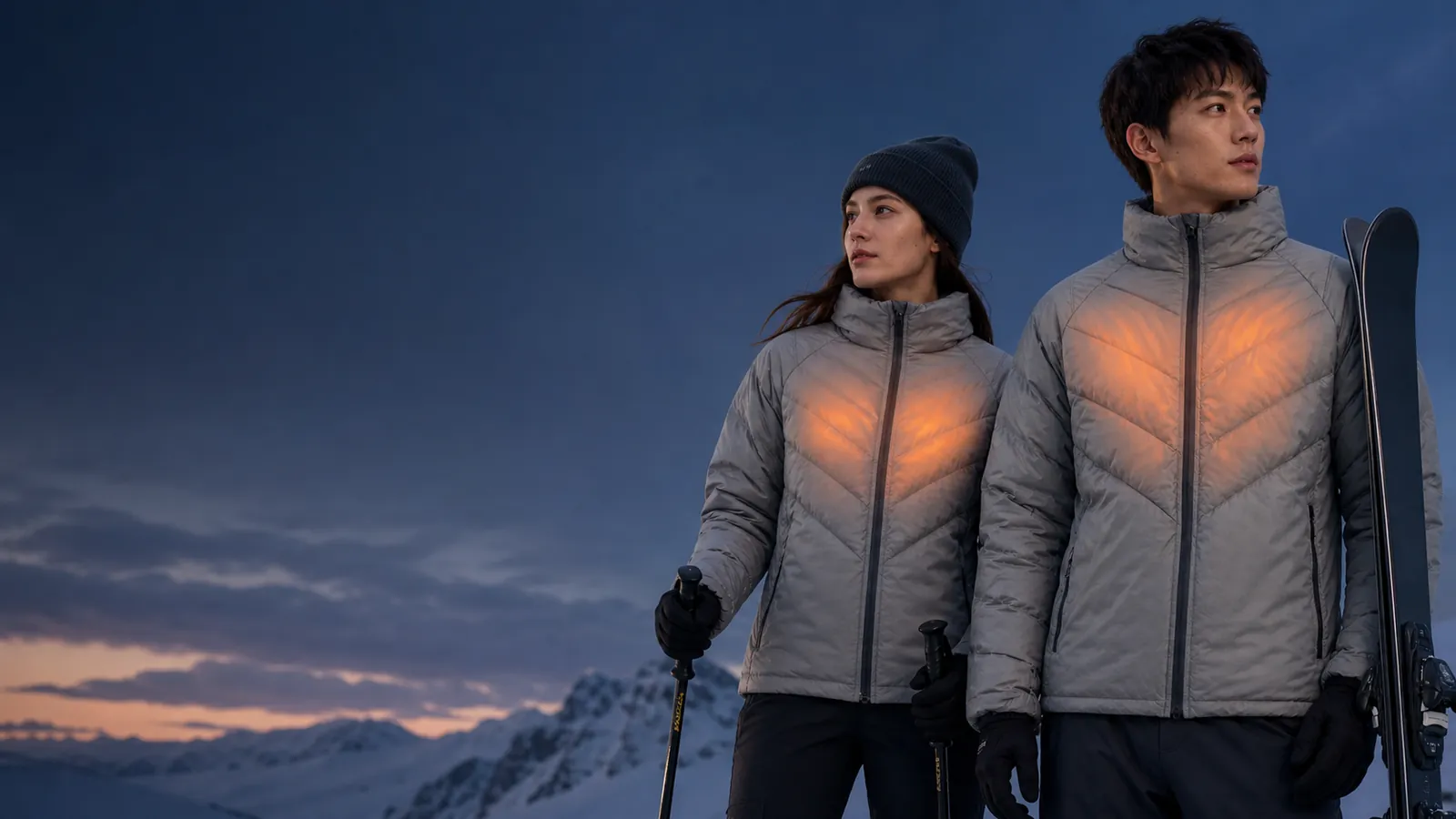
THERMOVEX supports brands developing heated jackets, heated vests and heated workwear with carbon nanotube (CNT) and graphene heating materials, area heating, controls and garment integration.
Engineering context
A successful heated garment balances warmth, freedom of movement, runtime, hand feel, washing, controls and brand presentation. Choosing a heater without defining those interactions creates avoidable risk later in development.
THERMOVEX connects textile-compatible heating materials, custom modules, sensing, controllers and garment construction in one OEM/ODM workflow. Brands can begin with a concept, an existing reference product or a defined technical brief.
Buyer specification guide
Use these six inputs to define a custom heated clothing project and select a prototype configuration.
Define outdoor, work, lifestyle or specialist use; expected weather; layering; movement; and the duration of heat required.
Specify chest, back, waist and pocket heating zones. Each selected panel provides area heating; panel size, placement and output are matched to garment construction and available power.
Specify supply voltage, battery capacity, connectors and temperature settings. Confirm heating speed and runtime on the selected garment, battery and setting under defined ambient conditions.
Coordinate shell, lining, insulation, seams, heater attachment, lead routing, removable parts and care instructions.
Configure fabric, colour, trims, labels, packaging, controller appearance and instructions for the intended retail channel.
Plan finished-product checks and documentation around the sales region, claims, battery route and final bill of materials.
Application fit
The use case determines the practical voltage, heater geometry, control strategy, construction and evidence plan.
Multi-zone warmth for outdoor, commuting, lifestyle and technical collections.
Garments designed around cold, wet or exposed working conditions and the existing PPE system.
Small-area heating where routing, dexterity, current and local temperature control are tightly constrained.
Low-profile heating integrated with stretch, drape, body contact and defined care requirements.
Development route
Every stage resolves a different technical and commercial risk before the product moves toward volume manufacturing.
Align the user, channel, target market, reference design, price position and commercial volume.
Define heating zones, module construction, temperature control, battery interface and garment stack.
Review pattern integration, comfort, heat distribution, controller usability and care construction.
Freeze the approved configuration, quality plan, packaging and documentation before manufacturing transfer.
Buyer questions
Final specifications, claims and commercial terms are confirmed for the approved product configuration.
The scope can include garment type, fabrics, insulation, heater geometry, number of zones, voltage, controls, battery interface, trims, colours, labels, packaging and instructions.
Private-label and custom OEM/ODM programs can be developed. Final scope, commercial terms and documentation depend on the product design, target market and approved bill of materials.
Washable heated garment designs can support repeated washing, including machine washing where validated for the selected configuration. Disconnect and remove the battery before washing. The approved care label defines the wash cycle, treatment of other removable electronics and drying method; reconnect power only when fully dry.
A useful first brief includes product category, target market, heating zones, temperature or comfort target, preferred power source, materials, estimated annual volume and launch timing.
Bring us the product requirement
Send your jacket or vest reference, target market, preferred heating zones, power source, wash requirements and expected quantity. We will review the configuration and confirm the sample scope.
Request a Sample →