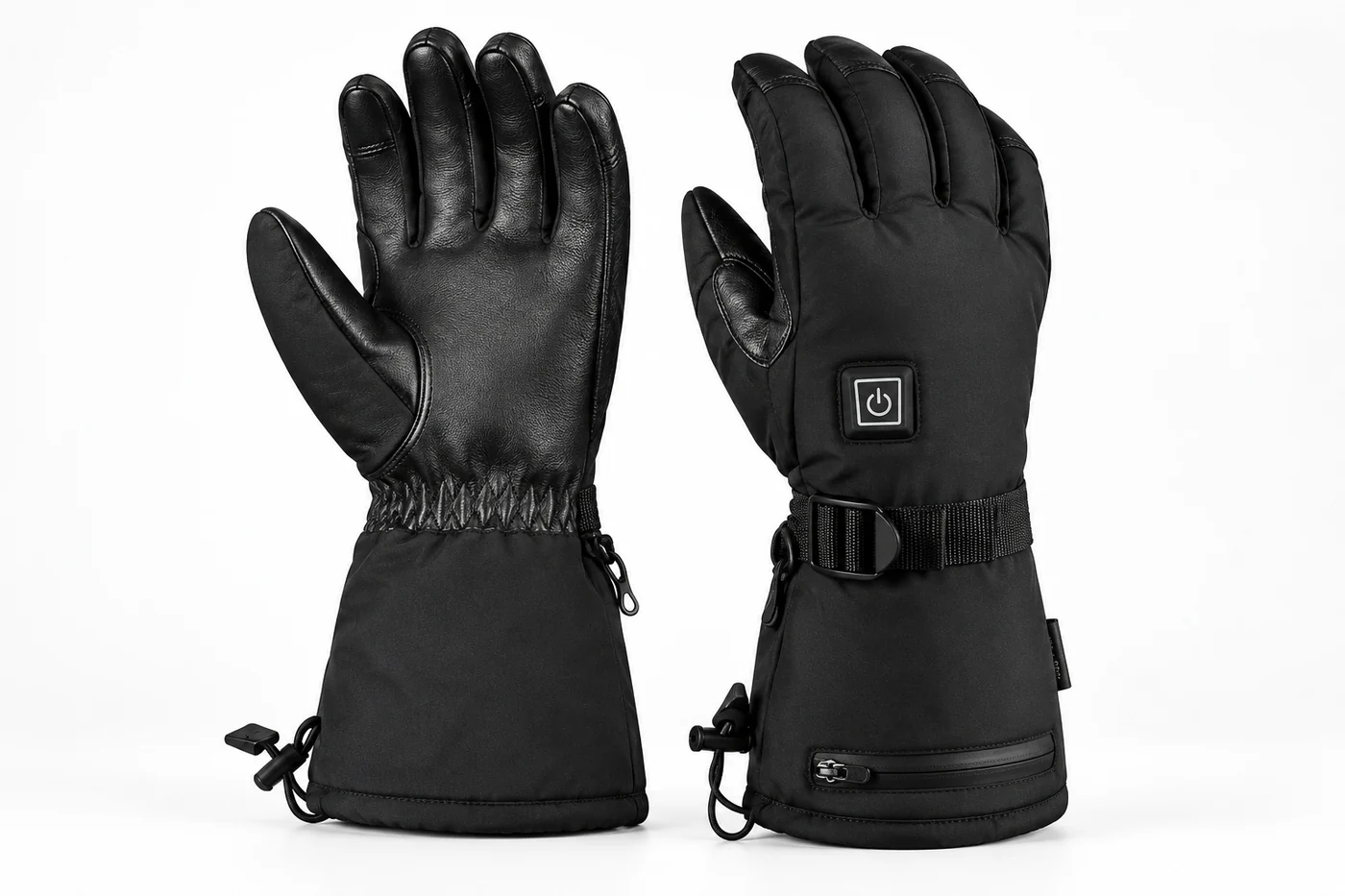
Heated gloves for winter work, snow and outdoor use.
THERMOVEX develops heated gloves for OEM / ODM programs and heated workwear solutions. Hand protection, dexterity, heating zones, battery power and controls are specified around cold-weather work and outdoor use, with a defined finished-product validation path.
A glove program is a system decision, not only a heating element.
For gloves, the heating path must fit the hand, shell materials, insulation stack, grip zones, cuff construction, battery placement and control access. A practical procurement brief therefore starts with the wearer and work environment.
The 1017R/1019R reference below gives buyers a tangible starting platform. It can be adapted for private-label outdoor, ski, hiking, travel and cold-weather workwear programs; final configuration, heat zones, runtime, care instructions and compliance evidence are confirmed on the approved product.
Reference product configuration
1017R / 1019R heated glove platform.
A black, long-cuff winter glove reference combining genuine leather in high-contact areas with weather-resistant laminated nylon and polyester insulation. The supplied product record identifies a three-level heated configuration with a rechargeable 3.7 V battery reference.
Grip, abrasion-facing contact and hand protection.
Back, cuff & shell
90% nylon + 10% TPU laminated fabric
Weather-facing shell and structured long-cuff construction.
Insulation
100% polyester
Thermal layer within the glove assembly.
Cuff adjustment
Drawcord
Helps manage fit and exposure at the cuff.
Electrical reference
Heating control3 reference heat levels
Battery3.7 V · 6000 mAh · 22.2 Wh reference
Charging inputUSB-C · 5 V / 2 A reference
Output5 V / 2 A reference
ColourBlack
Reference palm width
S7.5 cmM8 cmL8.5 cmXL9 cm
Reference information is drawn from the supplied 1017R/1019R product record. Heating coverage, temperature, runtime, waterproof performance, care method, controller interface and test documentation are project-specific and must be defined and validated for the final product configuration.
Buyer specification guide
Six choices that determine the right heated glove.
These decisions align the thermal design with protection, dexterity and the intended commercial channel before sampling.
01
Use environment
Define the cold, wind, moisture exposure, activity level, work duration and required compatibility with other PPE.
02
Heating-zone placement
Confirm the desired warming areas and the balance between coverage, flexibility, current path and hand movement.
03
Shell and grip
Select leather, laminated fabric, reinforcement, cuff geometry and closure around the use case and expected contact surfaces.
04
Power and control
Define battery placement, connection, control location, heat levels and the ambient conditions used to verify heating response and runtime.
05
Fit and sizing
Confirm target hand measurements, liner volume, movement allowance and fit grading for the intended market.
06
Evidence and instructions
Define product claims, target region, labeling, care instructions and finished-product tests around the approved bill of materials.
Application fit
Designed as a platform for demanding cold-weather hands.
Common starting scenarios include winter outdoor work, snow and ski operations, hiking, travel and branded outdoor collections. The same platform can be developed toward a customer’s preferred shell, insulation, heat architecture, controller, packaging and labeling.
The practical product requirement should lead the design: a skier’s dexterity, a field worker’s exposure and a travel product’s battery interface are not the same engineering brief.
Development route
From product brief to approved glove sample.
Each stage closes a different technical and commercial question before manufacturing transfer.
01
Brief and reference review
Align use scenario, desired glove construction, target market, expected volume and product position.
02
Thermal and power architecture
Define heater location, control approach, battery interface and routing around fit and construction.
03
Prototype and wear assessment
Review fit, dexterity, perceived warmth, control access, connections and care construction in the sample.
04
Validation and production release
Freeze the approved configuration, finished-product evidence, instructions, packaging and quality plan.
Buyer questions
What should an RFQ include?
A concise but complete brief shortens sampling cycles and makes the technical proposal more reliable.
Can the glove be private-labeled?+
Yes. The development scope can include shell materials, colors, trims, branding, labels, packaging, control appearance and instructions, subject to the approved final configuration.
What battery and charging details should we specify?+
State your preferred battery interface, target runtime, charging route, operating environment and market. The 3.7 V / 6000 mAh / 22.2 Wh entry on this page is a reference platform, not a universal finished-product claim.
Is the glove machine washable?+
Care method must be determined for the final glove, electronic interface and assembly. Any washability claim, including machine washing, should be made only after the selected configuration has been validated and the approved care label is issued.
What information is needed for a quote?+
Send a reference style or photo, application, target market, shell and insulation preference, heating expectation, battery/control preference, size range, estimated quantity and launch timing.
Bring us the product requirement
Request a heated glove OEM sample.
Send your intended use, reference design, target market, preferred heating zones, power preference and expected quantity. We will review the platform and confirm an appropriate sample scope.